American Groundnut
Apios americana
Click here to download a PDF of this plant information page (for printing).
Sun Exposure: Full Sun, Part Sun
Season of Interest: Sumer, Fall
Bloom Time: June - August
Bloom Color: Maroon
Height: 8 to 16 ft.
Spread: 3 to 4 ft.
Spacing: 4 ft.
Water Needs: Average
Maintenance: Very low
Soil Type: Clay, Loam, Sandy, Rocky
Soil pH: Acidic, Neutral, Alkaline
Soil Drainage: Well drained
Pests: None
Diseases: None
Wildlife: Bees, Butterflies
Description:
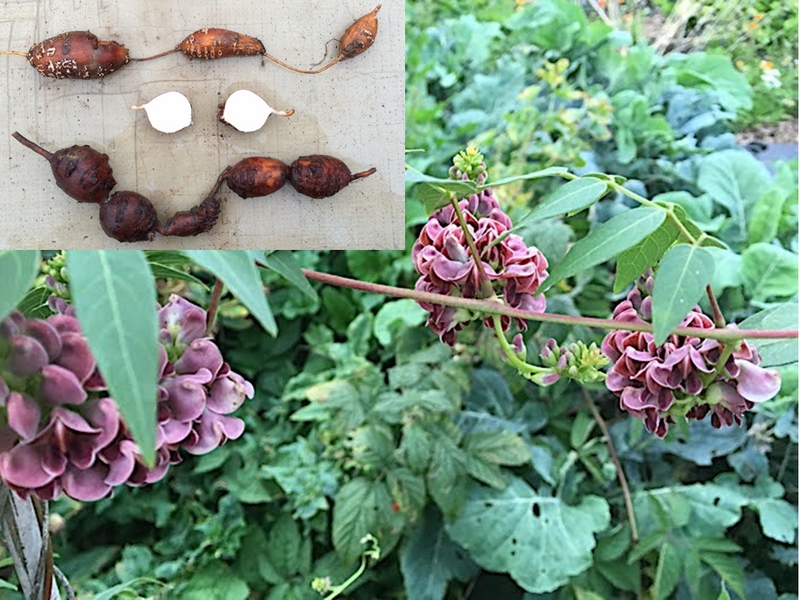
Known commonly as American groundnut, hopniss, or many other names, this vining plant is a perennial. A relative of peas, its vines can reach twelve feet long. The flowers it produces are similar in appearance to those of wisteria and produce edible pea pods. But it’s the tuber which is most fascinating. Groundnuts were a staple food of many Native American tribal groups. The first European arrivals to the American shores also cultivated them. Described as like a potato with a nuttier flavor, they’re said to be quite tasty! The plant tubers form in a long rhizome, each one attached to the next. They are often described as beads on a string, as you’ll find each tuber connected by a very slim bit of rhizome. When harvested, the smaller tubers are often saved to start the next year’s crop. Larger ones can be replanted or cooked and eaten. For more information see:
plants.ces.ncsu.edu/plants/apios-americana
Care and Growing Tips:
Full sun conditions are ideal for groundnuts. Temperature-wise, it can tolerate subtropical heat levels during the summer months. In the winter, tubers buried in the ground under mulch will survive even in snowy areas. The tubers can also be harvested in fall and stored over the winter, then planted out in early spring again. Moist to wet soil is preferable for the American groundnut. It requires lots of water to keep those huge vines green. Since the Apios americana tuber vines provide the energy that’s used to form tubers, they’re essential! In nature, the groundnuts grow in woodlands or along waterways. These locations provide ample soil moisture and collect leaf debris as natural mulch. Gardeners should water whenever the soil dries out. Be sure excess water drains off readily, so it doesn’t pool. But keep it damp enough that your plants aren’t lacking moisture. Sandy loam is the ideal for this plant. It’s loose enough to allow easy tuber and root penetration, but allows for drainage. The loam retains just enough water to keep the plants happy. Mulching is a necessity. Since they don’t like to dry out, be sure there’s plenty of organic material in and on your soil. This will prevent soil moisture evaporation. While container growing is an option, choose a fairly large one to allow for tuber growth. Stick with one plant per container, and add extra compost. Ensure you water these consistently, as the soil is more prone to drying out in containers. These plants are nitrogen fixers. Like soybeans, they replenish the nitrogen supply in the soil around them. They can maintain at this level for a long time without the need of fertilizers.