Eastern Columbine
Aquilegia canadensis
Click here to download a PDF of this plant information page (for printing).
Sun Exposure: Sun, Part Sun, Shade
Season of Interest: Spring, Summer
Bloom Time: May - July
Bloom Color: Red and Yellow
Height: 12 to 36 in.
Spread: 12 to 18 in.
Spacing: 18 in.
Water Needs: Average
Maintenance: Very low
Soil Type: Clay, Loam, Sandy
Soil pH: Neutral
Soil Drainage: Well drained
Pests: Leaf miner
Diseases: None
Wildlife: Bees, Buterflies, Hummingbirds
Description:
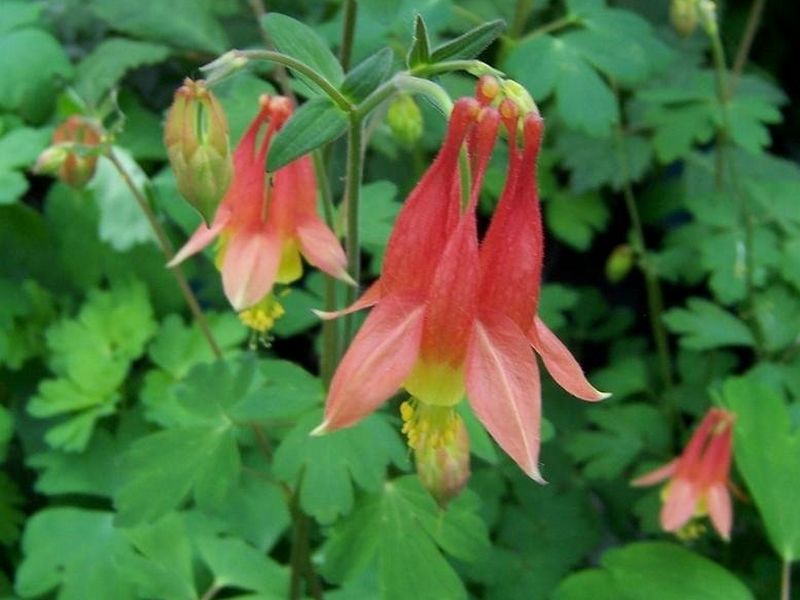
Eastern Columbine is a beautiful perennial native to North America. Columbine is a great spring garden plant to jump start color in your garden. In the wild, or in a garden, they don’t handle competition well and can be crowded out by larger plants. Columbines will bloom for about 6 weeks in late spring to early summer and are loved by hummingbirds and bumblebees. The flowers are ‘nodding’ and hang down in clusters from a central stem. The flowers have five petals and a single spur on top. The blooms of columbines resemble Chinese lanterns and are quite beautiful to see dangling in a gentle breeze. Watching a hummingbird go from bloom to bloom, hovering underneath to reach the nectar is fun to watch. They love the nectar, and are generally drawn to the color red. And since it is an early bloomer, having Columbine in your garden can encourage hummingbirds to build their nests nearby. For more information see:
plants.ces.ncsu.edu/plants/aquilegia-canadensis
Care and Growing Tips:
In the wild you will find Columbine growing on the forest floor, or on limestone cliffs, and in general where there aren’t a lot of other plants. So, that is why so many references tell you that this is a ‘shade’ plant. But in reality, Columbine will grow just fine, and even thrive in full sun. For soil, the key thing is that it drains well. The one place you won’t find these plants is in a bog or swamp. Now, since the root system is shallow, you may need to provide supplemental watering during drought. But these are low maintenance plants. Deadheading Columbine flowers will prolong the blooming period, and it will also help reduce self-seeding. Since this plant is dies back to the ground in winter, you can remove dead foliage after the plant has gone dormant. If you grow Columbines in a well kept flower bed, and wish to keep it tidy then you can remove the foliage after the plant has turned brown or after you’ve had freezing temperatures. Alternatively, you don’t have to do anything. The following Spring this plant will send up new shoots/leaves weather or not you clear away the dead leaves from the previous season. So, it is just kind of up to you and what kind of garden you have.