Blue Wild Indigo
Baptisia australis
Click here to download a PDF of this plant information page (for printing).
Sun Exposure: Full Sun, Part Sun
Season of Interest: Spring, Summer
Bloom Time: April - July
Bloom Color: Blue
Height: 30 to 40 in.
Spread: 24 to 32 in.
Spacing: 36 in.
Water Needs: Average
Maintenance: Very little
Soil Type: Clay
Soil pH: acid, Neutral
Soil Drainage: Well-drined
Pests: None
Diseases: None
Wildlife: Bees, Buterflies, Hummingbirds
Description:
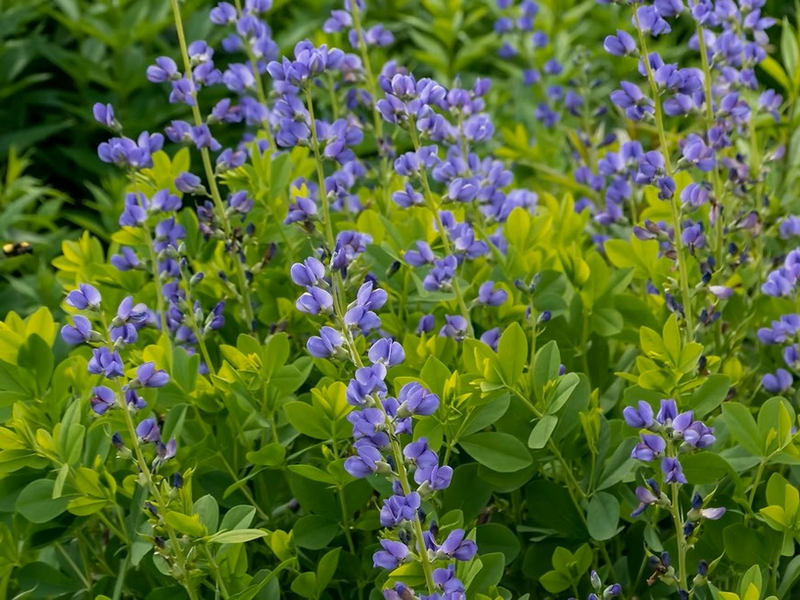
Blue Wild Indigo is a large, upright perennial with gray-green leaves and beautiful long racemes of indigo-blue flowers that appear from April through July. Wild indigo, also called false indigo, is a native, thus non-invasive, herbaceous perennial plant in the legume family with pea-like flowers. It develops black seed pods that can be left on the plant for winter interest. Wild indigo grows best in woodland conditions, requires full or partial sunlight, in slightly acidic or neutral soil, and withstands the high heat of summer and the frigid cold of winter down to -40 F. This long-lived plant has a slow growth rate, taking a year or more to mature, and plants started from seed can take three to four years to flower. It forms tall clumps which are especially attractive planted next to wooden fences. The bright, indigo blue flowers are attractive when combined with yellow or white flowering perennials. Flowers are either on long-stalked clusters above the leaves or axillary. For more information see:
plants.ces.ncsu.edu/plants/baptisia-australis
Care and Growing Tips:
Wild Indigo will get floppy without at least four hours of sunlight daily. Full sun also prevents fungal diseases. This plant prefers moderately well-draining soils but tolerates dry soils once established. It is not particular about soil pH but does best in slightly acidic soil to neutral. Keep wild indigo watered regularly for the first few weeks after transplanting, but after this, it will only need to be watered during very dry conditions. This is a native wildflower, and in most regions, it does fine with whatever rainfall nature provides. It does equally well in dry and humid climates, provided it gets adequate soil moisture. Feeding is unnecessary for these plants and can even be counterproductive; excessive fertilizing can cause the plant to get leggy and flop over.