Yellow Trout Lily
Erythronium americanum
Click here to download a PDF of this plant information page (for printing).

Sun Exposure: Part Sun, Shade
Season of Interest: Spring
Bloom Time: Early spring
Bloom Color: Yellow
Height: 4 to 6 in.
Spread: 4 to 6 in.
Spacing: 6 in.
Water Needs: Above average
Maintenance: Very little
Soil Type: High in organic matter
Soil pH: Acidic (pH < 6.0)
Soil Drainage: Well drained
Pests: None
Diseases: None
Wildlife: Bees
Description:
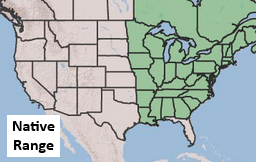
Erythronium americanum, commonly known as the Yellow Trout Lily, Adder's Tongue, or Dogtooth Violet, is a perennial plant native to eastern North America. It is part of the Liliaceae family and is known for its distinctive yellow flowers and mottled leaves that resemble the markings of a trout. This plant thrives in temperate climates and typically grows in deciduous forests and woodlands. It is a spring ephemeral, which is a plant that blooms in the early spring then goes dormant. It can take a few seasons before this bulb produces flowers, but once it blooms, it can form colonies.
Several of the common names for this plant refer to the flower or leaf appearance at different phases of its growth cycle. As one example, the Trout lily name refers to its leaf mottling resembling a trout moving through water and the general shape of the petals. Adder's Tongue refers to shape of the flower's stamen. Other common names, Dogtooth Violet refer to its tooth-like shaped bulb. For more information see:
plants.ces.ncsu.edu/plants/erythronium-americanum
Care and Growing Tips:
Yellow Trout Lily prefers moderate temperatures and indirect bright light. It thrives in environments with high humidity and requires soil that stays moist during the spring. It prefers loamy soil that is well-draining but retains moisture. Adding organic matter to the soil can help improve its nutrient content and drainage.