American Witch Hazel
Hamamelis virginiana
Click here to download a PDF of this plant information page (for printing).
Sun Exposure: Sun, Part Sun
Season of Interest: Summer, Fall, Winter
Bloom Time: November - December
Bloom Color: Yellow
Height: 15 ft.
Spread: 10 ft.
Spacing: 15 ft.
Water Needs: Average
Maintenance: Very little
Soil Type: Clay, Loam
Soil pH: Acidic (pH < 6.0)
Soil Drainage: Well drained
Pests: None
Diseases: None
Wildlife: Bees, Butterflies, Moths
Description:
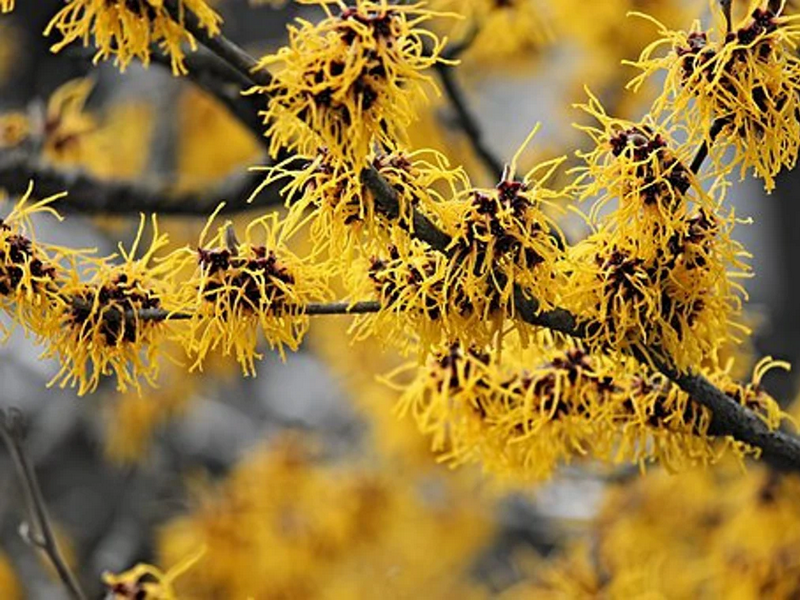
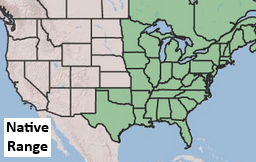
American Witch Hazel is a hardy shrub or small tree that produces eye-catching, fragrant yellow blooms in the wintery landscape. Native to North America, it grows best in mild climates, in full sun, and in moist, slightly acidic, well-draining soil. Witch hazel grows as a deciduous shrub or small tree, typically reaching 15–20 feet tall. It has dark green leaves that turn a vibrant yellow in fall. The flowers are bright yellow with several crinkly, ribbon-shaped petals, blooming from late October to December, often after the leaves have fallen. Witch hazel grows in woodlands, forest margins, and along stream banks where it attracts moths and supports numerous caterpillar species, making it an important pollinator plant. This plant is suitable for shrub borders, woodland gardens, screens, or tall hedges. Its fall-blooming flowers and vibrant autumn foliage make it an attractive ornamental plant. Witch hazel branches can also be trimmed off right before blooming and brought indoors to bloom as cut stems. Give the cut end a diagonal slice at the bottom and place it in warm water. The forked twigs have also historically been used as divining rods, and the wood is dense and hard, suitable for small woodworking projects. For more information see:
plants.ces.ncsu.edu/plants/hamamelis-virginiana
Care and Growing Tips:
Full to partial sun is ideal for witch hazel plants. Though they usually prefer full sun, partial shade is best in hot climates with intense afternoon sunshine. Witch hazel likes rich, loamy, moist soil conditions but is quite hardy and can adapt to differing soils. These plants can acclimate to acidic and alkaline soil pH levels, although acidic to neutral soil is best. Good drainage and moist conditions are essential for healthy witch hazel plants. Try adding a layer of mulch on top of the soil to retain moisture. Witch hazel is unique in that it flowers during the cold winter months. It is tolerant of a wide range of conditions from USDA zones 3 to 9, thriving in both cold and hot temperatures. Pruning is not required, but the occasional trim-up can help maintain a clean shape and encourage blooming. Prune after the shrub has finished blooming to promote next year’s bud growth. Remove suckering offshoots at the base to keep this plant clean and tidy.