Great Blue Lobelia
Lobelia siphilitica
Click here to download a PDF of this plant information page (for printing).
Sun Exposure: Full Sun, Part Sun
Season of Interest: Summer
Bloom Time: July - September
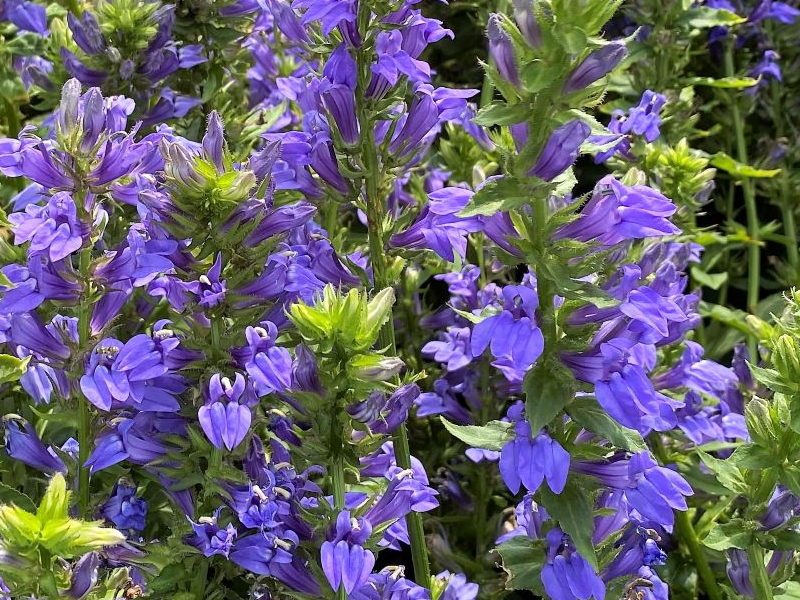
Bloom Color: Blue
Height: 36 to 42 in.
Spread: 12 to 18 in.
Spacing: 16 in.
Water Needs: High
Maintenance: Very littke
Soil Type: High in organic matter
Soil pH: Neutral
Soil Drainage: Can be wet
Pests: None
Diseases: None
Wildlife: Bees, Butterflies, Hummingbirds
Description:
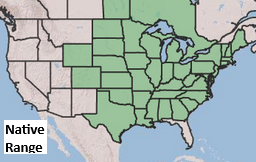
Great Blue Lobelia is a long-lived perennial flower native to Eastern North America and is important to wildlife as it will attract numerous species of bees, butterflies, and hummingbirds. Groupings of Blue Lobelia can make a showy eye-catching display of dark blue to purple color. The nectar produced by the flowers is attractive to long-tongued bees, large butterflies such like the Eastern Tiger Swallowtail, and also hummingbirds and hummingbird moths. The plants will stay erect and look great as long as they receive enough moisture. ‘Blue’ flowers that are actually blue are not that common, so that further makes Blue Lobelia unique. It grows well in areas where the soil is wet. In the wild you often encounter it near streams or even dry creek beds as long as the area gets partially shaded.
Blue Lobelia will emerge in early Spring as small shoots protruding in the soil alongside the previous years stalks. Low basal leaves will grow through Spring into early Summer, eventually forming stalks that will rise above. The spike will bloom from bottom to top for about one month in mid to late Summer. Seed capsules will replace the flowers about 4-6 weeks after blooming. For more information see:
plants.ces.ncsu.edu/plants/lobelia-siphilitica
Care and Growing Tips:
Blue Lobelia prefers full sun or partial shade. Although, it will need more frequent watering if grown in full sun. Here in East Tennessee it can also grow in medium or well-draining soil as long as it gets sun in the morning and shade in the hot afternoon. Ideally Blue Lobelia will grow best in fertile soil with organic matter present, which would mimic it’s natural habitat of growing near streams. But don’t let that dissuade you from planting it in poorer soils. The only maintenance needed for Great Blue Lobelia is to remove the pervious years flower stalks in the Spring, or a couple weeks after flowering if one wants to avoid self-seeding. Blue Lobelia does not need supplemental fertilizer to grow well and put on a beautiful display.