Coral Honeysuckle
Lonicera sempervirens
Click here to download a PDF of this plant information page (for printing).
Sun Exposure: Full Sun, Part Sun
Season of Interest: Spring, Summer, Fall
Bloom Time: April - September
Bloom Color: Red to Orange
Height: 10 to 20 ft.
Spread: 3 to 6 ft.
Spacing: 6 ft.
Water Needs: Average
Maintenance: Very little
Soil Type: Clay, Loam
Soil pH: Acidic, Neutral
Soil Drainage: Well drained
Pests: Aphids
Diseases: Powdery mildew
Wildlife: Bees, Butterflies, Hummingbirds, Birds
Description:
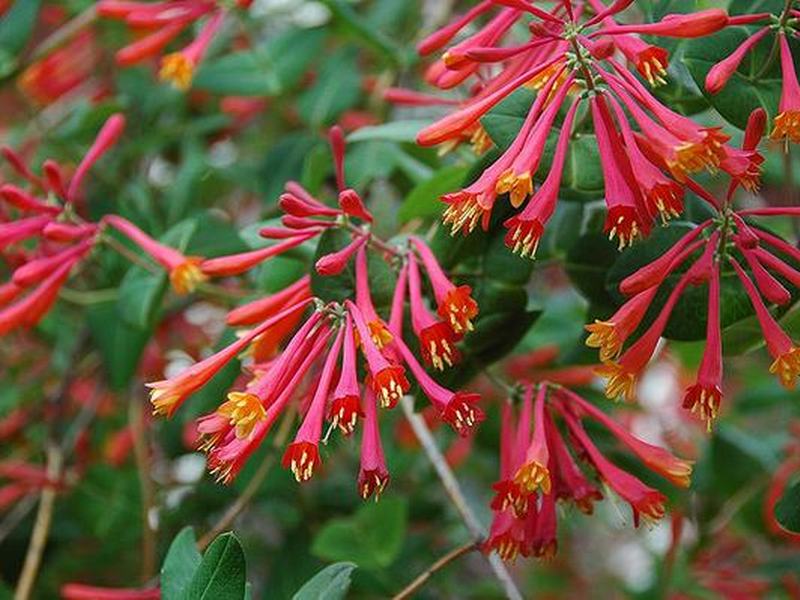
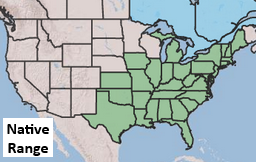
Coral honeysuckle produces beautiful trumpet-shaped flowers in red, coral, orange, or yellow. The plant is native to the southeastern United States and is a perfect alternative to invasive honeysuckle species such as Japanese honeysuckle. The flowers of coral honeysuckle attract hummingbirds and butterflies, while its red, inedible berries in the fall attract songbirds. The oblong, paired leaves at the upper end of the vines are connected, creating the appearance of one leaf. Mature vines have papery, orange-brown bark that complements the orange-red flowers. Coral honeysuckle is a semi-evergreen—evergreen in warm climates and deciduous in colder regions. For more information see:
plants.ces.ncsu.edu/plants/lonicera-sempervirens
Care and Growing Tips:
Providing this plant with full sun will produce the best blooms. Though it grows in part shade, the plant will not flower as abundantly. This plant adapts to a variety of soil conditions but needs well-draining soil. If the soil does not drain well, add compost before planting. Coral honeysuckle prefers slightly acidic to neutral soil (pH 5.5 to 7). Regular watering will help promote healthy blooming and is most important for young, establishing plants. Established plants are very drought-tolerant. Depending on the precipitation in your area, you might not ever have to water this plant. These native vines tolerate both heat and cold. Coral honeysuckle withstands hard frosts and cold winters. Fertilize coral honeysuckle once in the spring with a complete, slow-release fertilizer. Excess nitrogen, such as from lawn run-off, causes the plant to produce more foliage than flowers. Coral honeysuckle only needs pruning to maintain its desired shape or size. The best time to prune is after the bloom so you don't accidentally remove any flower buds.