Eastern Prickly Pear Cactus
Opuntia humifusa
Click here to download a PDF of this plant information page (for printing).
Sun Exposure: Full Sun
Season of Interest: Spring, Summer, Fall
Bloom Time: June - September
Bloom Color: Yellow / Red
Height: 6 to 12 in.
Spread: 12 to 18 in.
Spacing: 18 in.
Water Needs: Below average
Maintenance: None
Soil Type: Clay,Loam, Sandy, Rocky
Soil pH: Acidic, Neutral, Alkaline
Soil Drainage: Well drained
Pests: None
Diseases: None
Wildlife: Bees
Description:
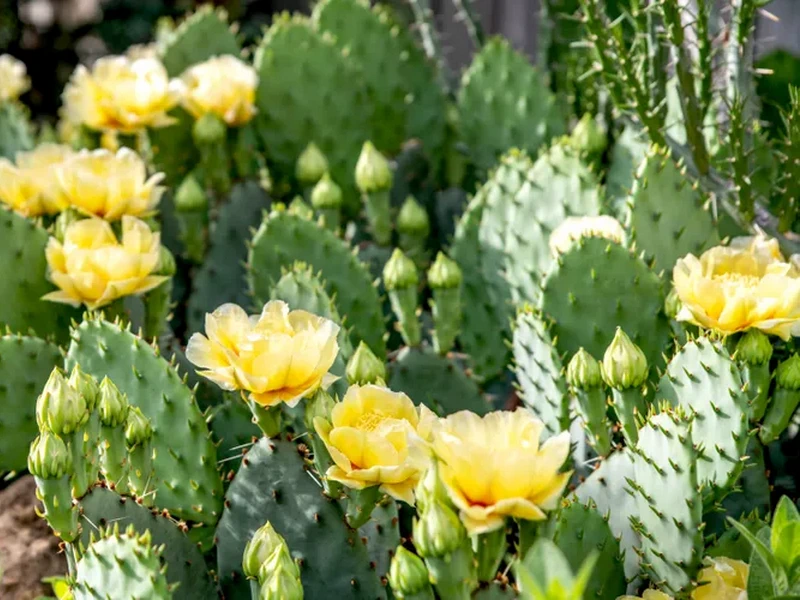
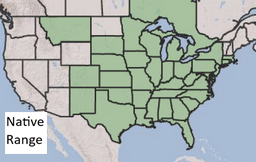
Eastern Prickly Pear Cactus is a surprisingly easy to grow. It's hardy enough to survive in climates with harsh winters and boasts a cheery, delicate flower. Native to the eastern United States, the eastern prickly pear cactus doesn’t have the stature of its desert cousins which can top 15 feet, but this smaller version adds a touch of the southwest to cooler climates and makes up for its diminutive size with its hardiness. Its stems are divided into flat paddle-like segments that are approximately two to seven inches long with a blue tint. The narrow spines are wedge-shaped and the flowers, which come into bloom in mid-summer, are a brilliant yellow. East of the Appalachian Mountains, the flowers often have a red or orange center. The flowers are followed by edible purple or red fruits called tunas that can be made into nice jellies and pickles. For more information see:
plants.ces.ncsu.edu/plants/opuntia-humifusa
Care and Growing Tips:
Since it is a cactus, they need well-draining soil first. Plant in full sun in a sandy or gravely mix and go easy on the water. Also, don’t be alarmed if your plants appear to deflate during the winter—this is their normal response to dormancy, and they’ll plump back up in spring. As with most cacti, the eastern prickly pear does best in full sun for at least eight hours a day. That being said, it can handle partial shade if it's planted in hotter climates, like a more traditional desert landscape. More light exposure will also lead to a larger plant and more blooms come mid-to-late spring and summer.
For the prickly pear to thrive, it needs to be planted in well-draining soil. Your best bet is a mixture that is dry, sandy, or gravelly, but it can also do well in a mixture that is primarily clay, so long as it drains very well and the soil does not retain much moisture. When it comes to pH levels, prickly pear isn't especially high-maintenance and can thrive in a neutral-to-acidic mixture with a pH level of 6.0–7.5. As to be expected, the prickly pear cactus is extremely drought tolerant, so when in doubt, water it less than you think it needs. In most areas, the typical rainfall will likely be enough for the cactus to thrive but if not, you can plan to water the plant every two to four weeks. No fertilizer is needed for all but the poorest soils, but if its green color starts to pale or it doesn’t flower, apply a balanced fertilizer in the spring.