Blue Ridge Beardtongue
Penstemon smallii
Click here to download a PDF of this plant information page (for printing).
Sun Exposure: Sun, Part Sun
Season of Interest: All
Bloom Time: May - July
Bloom Color: White to Purple
Height: 24 to 36 in.
Spread: 16 in.
Spacing: 24 in.
Water Needs: Average
Maintenance: Prune spent flower stalks
Soil Type: Clar, Loam, Sandy, Rocky
Soil pH: Acidic, Neutral
Soil Drainage: Well drained
Pests: Slugs (Deer and Rabbit resistant)
Diseases: None
Wildlife: Bees, Butterflies, Hummingbirds
Description:
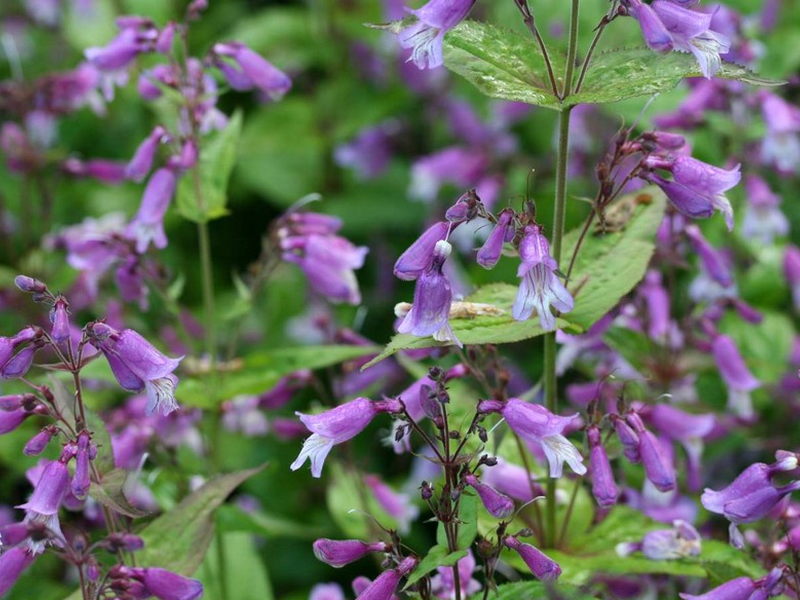
Blue Ridge Beardtongue is a southeastern treasure that brings the wild beauty of the Blue Ridge Mountains straight into your backyard. It is a standout in the Penstemon family for its vibrant, orchid-like flowers and its hardy, semi-evergreen foliage that shifts colors with the seasons. If you are looking to create a sanctuary for hummingbirds while adding a touch of Appalachian charm, this plant is an ideal choice. this plant produces clusters of tubular, bell-shaped flowers in shades of lavender-pink to deep purple. The interior of the bloom is white with distinct purple "nectar guides" that lead pollinators directly to the nectar. The leaves are lance-shaped with noticeably serrated (saw-toothed) edges. They grow opposite each other along the stem and are often glossy, providing a lush backdrop for the flowers. Unlike many other garden perennials, the stems of Small's Beardtongue are often a deep reddish-maroon. In the autumn and winter, the green leaves frequently take on a beautiful bronze or burgundy hue. The name "Beardtongue" isn't just a quirky nickname; it’s a literal description! Inside the flower, there is a sterile fifth stamen (called a staminode) that is covered in tiny, stiff yellow hairs, making it look exactly like a fuzzy little tongue sticking out of the flower's mouth. For more information see:
plants.ces.ncsu.edu/plants/penstemon-smallii
Care and Growing Tips:
Blue Ridge Beardtongue is a rock-garden superstar. It evolved to grow on rocky slopes and cliffs, meaning it absolutely demands excellent drainage. If planted in heavy, soggy clay, its roots may rot during the winter. It is much better to underwater this plant than to overwater it. It is a relatively short-lived perennial (usually 4–6 years), but it is an excellent self-seeder. If you want a permanent colony, leave the spent flower stalks in place so the seeds can drop. If you prefer a tidy look, "deadheading" the old flowers will often encourage a second, smaller flush of blooms. This plant is generally considered non-toxic to humans, dogs, and cats. It is a safe choice for high-traffic family gardens. While not toxic, the fine hairs on the stems and the "beard" inside the flower can occasionally cause very mild mechanical irritation for those with ultra-sensitive skin. Wearing gloves while pruning is a simple precaution.