Clustered Mountain Mint
Pycnanthemum muticum
Click here to download a PDF of this plant information page (for printing).
Sun Exposure: Full Sun, Part Sun
Season of Interest: Summer
Bloom Time: May - September
Bloom Color: White / Pink
Height: 30 to 40 in.
Spread: 28 in.
Spacing: 32 in.
Water Needs: Average
Maintenance: None
Soil Type: Clay, Loam, Sandy, Rocky
Soil pH: Acidic
Soil Drainage: Well drained
Pests: None
Diseases: None
Wildlife: Bees, Butterflies
Description:
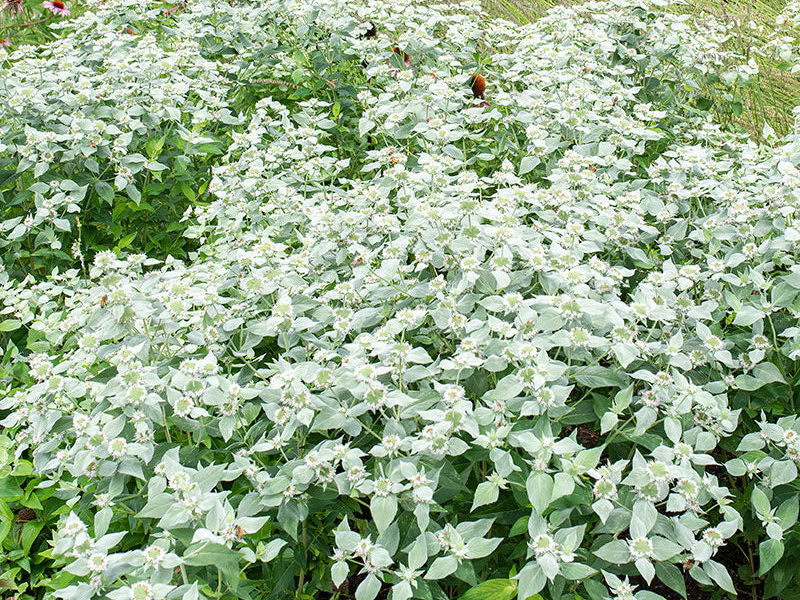
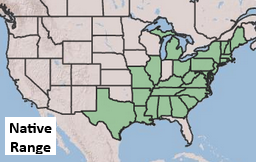
If you love minty herbal tea, try adding a Clustered Mountain Mint plant or two to your garden. This perennial plant has a minty scent when the leaves are rubbed or crushed, and can be used to make tea. It's also a fantastic pollinator plant, thanks to its silvery white flowers that produce copious amounts of nectar. Native to the eastern U.S. and Canada, clustered mountain mint is part of the mint family (Lamiaceae) but isn't a true mint itself. For more information see:
plants.ces.ncsu.edu/plants/pycnanthemum-muticum
Care and Growing Tips:
Mountain mint is generally easy to grow when its basic care needs are met. Mountain mint can grow in full sun to partial shade. When grown in a sunny area, it produces more of its attractive white to pink flowers. Mountain mint does best in well-draining soil with a neutral or slightly acidic pH. This plant can grow in a variety of soils, including sandy, clay, and loamy soils. Keep the soil moist while the plant is becoming established, and then on the dry side afterward. These plants are very drought-tolerant. Mountain mint is a hardy perennial that can thrive in cold temperatures as well as hot, humid summers. Mountain mint typically doesn’t need to be fertilized unless the soil is extremely poor.
Mountain mint can spread quickly in most conditions. There’s no need to prune it if you don’t mind it growing and spreading. If you prefer to keep it contained, prune the roots with a spade in the spring months. Mountain mint isn’t susceptible to many diseases. A benefit of mountain mint is its deer and rabbit resistance. Its fragrant leaves keep these animals from munching on this plant. If rabbits and deer are a problem in your garden, plant mountain mint throughout the garden as a deterrent.