Dewberry
Rubus flagellaris
Click here to download a PDF of this plant information page (for printing).
Sun Exposure: Full Sun, Part Sun
Season of Interest: Summer
Bloom Time: May
Bloom Color: White
Height: 3 to 4 ft. ft.
Spread: 8 to 15 ft.
Spacing: 12 ft.
Water Needs: Average
Maintenance: Romove old canes
Soil Type: Clay, Loam, Sandy, Rocky
Soil pH: Acidic, Neutral
Soil Drainage: Well drained
Pests: None
Diseases: Honey fungus
Wildlife: Bees, Butterflies
Description:
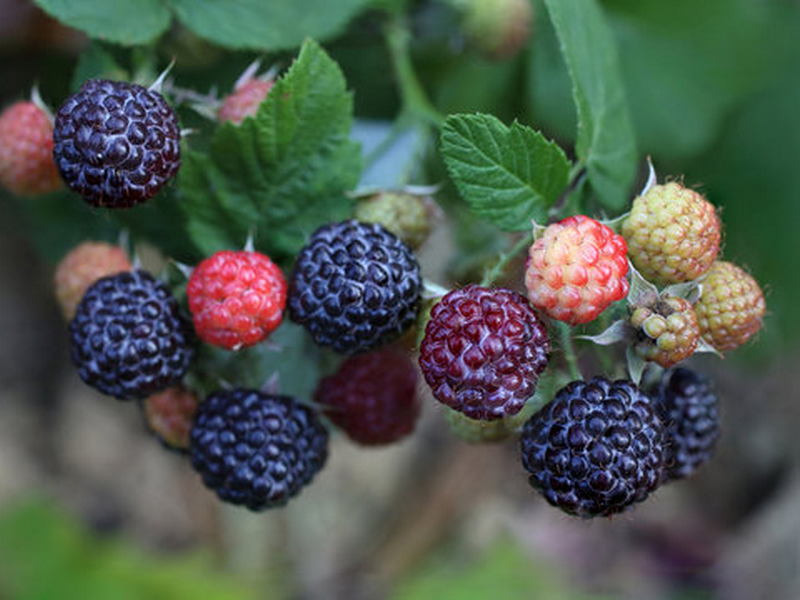
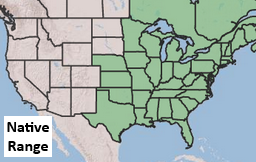
The dewberry is a very low-growing perennial shrub that behaves like a woody vine, producing stems up to 15 feet long that trail along the ground. This plant is found in much of Canada and the United States. The biennial stems have scattered hooked prickles and are green when young and brown when older. The fruiting stems rise from the trailing stem, sometimes rising to 4 feet above the ground. They produce fruit their second year and then die down. The showy white flowers close at night and are followed by 1-inch-long fruits that are edible and quite tasty. Native bees nest in the dead, hollow stems, so gardeners are encouraged to cut back dead stems to 12 to 24 inches and allow them to remain standing until they disintegrate on their own. For more information see:
plants.ces.ncsu.edu/plants/rubus-flagellaris
Care and Growing Tips:
Dewberries are easily grown in good well-drained loamy soil in sun or semi-shade. A very polymorphic species, it is often cultivated for its delicious fruit. Otherwise, grow it in a naturalized area for wildlife food and habitat. This plant prefers to grow in full sun, although it can tolerate some shade. If grown in shade, it may produce fewer berries. It prefers well-drained soils with a pH range of 5.0-6.5. It can tolerate a wide range of soil types, including sandy and clay soils, as long as they are well-draining. The plant also benefits from the addition of organic matter such as compost or manure to improve soil structure and fertility. Dewberries require consistent moisture throughout the growing season, and it should be watered deeply once a week when the top inch of soil feels dry. Pruning is essential to maintain the health and productivity of the plant, and it should be done in late winter or early spring before new growth appears. Weak and dead canes should be removed, and the healthy canes should be thinned out to encourage better air circulation and light penetration. Fruit-bearing canes (second year) should be given priority when thinning out.