American Elderberry Tree
Sambucus canadensis
Click here to download a PDF of this plant information page (for printing).
Sun Exposure: Full Sun, Part Sun
Season of Interest: Spring, Summer
Bloom Time: April - Auguat
Bloom Color: White
Height: 5 to 12 ft.
Spread: 6 to 12 ft.
Spacing: 12 ft.
Water Needs: Average
Maintenance: Very little
Soil Type: Clay, Loam, Sandy
Soil pH: Acidic, Neutral
Soil Drainage: Well-drained
Pests: None
Diseases: Powdery mildew, Leaf spot
Wildlife: Bees, Butterflies, Hummingbirds
Description:
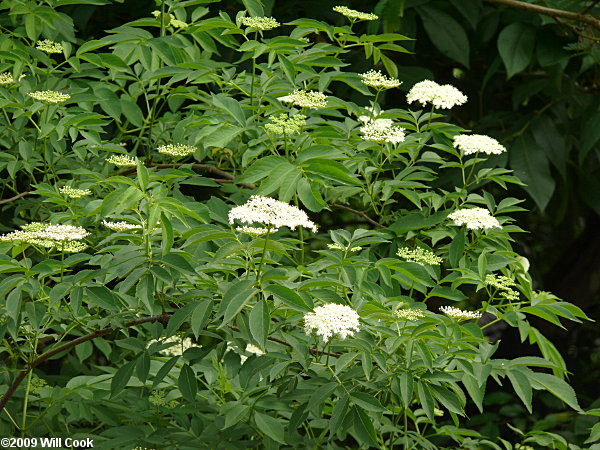
American elderberry is a versatile deciduous shrub recognized by its bright white flowers and small, dark fruits that are perfect for making jellies or pies. Pollinators benefit from these shrubs, which thrive in full sunlight with soil that is both moist and drains well. Use this plant in naturalized areas, as a hedge, in a woodland, or along streams and ponds. It is a good addition to butterfly, edible, native, pollinator, or rain gardens. It is effective erosion control in moist sites. Due to the plant's suckering and unkempt appearance, it is best to use this shrub in the background of a home landscape. It does not lend itself well to more formal garden settings. The fruits are clusters of rounded, edible, purplish-black drupes. They are on display from August to September. Each berry is 1/4 inch across, contains 3 to 5 stones (endocarps or pyrenes), and is borne in large drooping clusters. The fruits are used to make jellies and wine. For more information see:
plants.ces.ncsu.edu/plants/sambucus-canadensis
Care and Growing Tips:
American elderberry can grow in many sun conditions, making it suitable for most yards or landscapes. For the most successful bush, plant your American elderberry in a soil that is humusy and moist. The plant can tolerate various soils, but they must be well-draining. A neutral-to-acidic pH level is recommended as well. When planting your American elderberry, choose a spot that isn't prone to standing water. Drought is pretty much the one thing it cannot tolerate—it loves rain. Your elderberry will need around an inch or two of water weekly during its peak growth period or during times of extremely hot and dry weather. Remember, the plant's roots are very close to the surface, so if the top layer of soil is dry, it's a good indication that they are too. As long as you have well-draining soil, there is little risk in overwatering the American elderberry.
American elderberry isn't fussy about temperature as long as it's cooler and moist rather than hot and dry. Though it prefers temperate weather, it does not have any special humidity needs. Fertilizing isn't essential but helps boost fruit growth. For starters, consider amending the soil before planting with manure or compost to increase its nutrient density. Beyond that, fertilizer your bush every spring with a 10-10-10 fertilizer mixture. You can make the shrubs into a standard (small tree) form by choosing and developing a central leader. Otherwise, it is usually a multi-trunked shrub. Plan on removing dead, damaged and diseased canes (flexible branches) at the start of spring. You should also remove canes that are over three years old since younger ones produce better and this pruning will encourage new growth. Pruning can also be used to make a shrub's appearance neater, as it can become a bit lanky.