Eastern Skunk Cabbage
Symplocarpus foetidus
Click here to download a PDF of this plant information page (for printing).
Sun Exposure: Part Sun, Shade
Season of Interest: Sping, Summer, Fall
Bloom Time: February - March
Bloom Color: Red/Green
Height: 24 to 30 in.
Spread: 18 in.
Spacing: 24 in.
Water Needs: High
Maintenance: Very little
Soil Type: Moist/Wet, High in organic matter
Soil pH: Acidic (pH < 6.0)
Soil Drainage: Medium to Soggy
Pests: None
Diseases: None
Wildlife: None

Description:
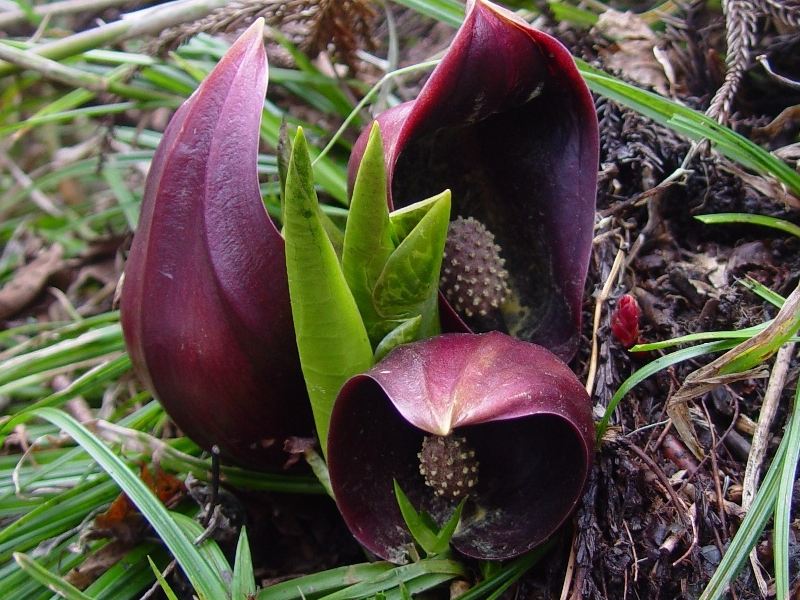
Eastern Skunk Cabbage is one of the early harbingers of spring, even before the ground thaws. It grows east of the Mississippi, from New England down to South Carolina. It is one of the first buds to appear in Spring, and one of the first bright green leaves you will see. It does this by being one Tennessee's only thermogenic plants. In late winter, skunk cabbage "burns" some of its stored carbohydrates to warm the ground around it and melt the ice and snow so that the flower can emerge. The flower consists of a sheath or hood that is dark red and inside is a spadix with the tiny green flowers. It is related to the tropical corpse flower, and also emits a foul order like rotting flesh that attracts flies which in turn pollinate the flowers. The flower disappears and the leaves emerge and remain until early fall when the upper part of the plants digests itself by turning into slime and sinking into the ground. However, The leaves are quite attractive during the growing season. They are dark green, oval shaped, quite large extending to 2 feet in length and a foot wide. Finally there is the plants bizarre root system. The flowers and leaves grow from a thick stem that comes up from a massive root system. It's nearly impossible to dig one completely up. The roots appear to be wrinkled and are contractile. This means that as the central taproot grows, it contracts like an accordion and pulls the crown of the plant deeper into the soil. This adaptation is beneficial for wetlands or stream-sides where the plants may be washed away if their root system isn't strong and deep. For more information see:
plants.ces.ncsu.edu/plants/symplocarpus-foetidus
Care and Growing Tips:
Plant in partial to full shade in a consistently moist or wet soil. May also be found in shallow standing water, 1 to 2 inches deep. Naturally found in wet deciduous forests, swamps, or shady wetlands.