Rose Verbena
Verbena canadensis
Click here to download a PDF of this plant information page (for printing).
Sun Exposure: Full Sun, Part Sun
Season of Interest: Spring, Summer, Fall
Bloom Time: April - October
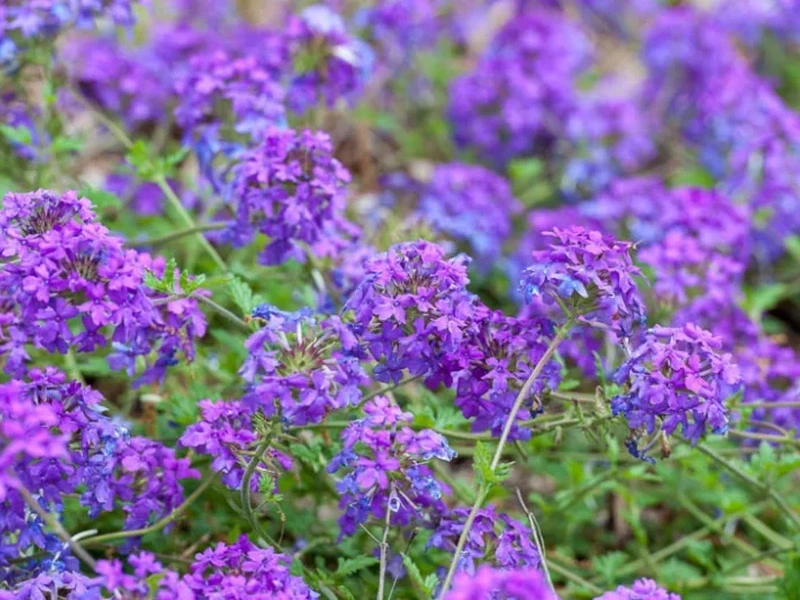
Bloom Color: Purple
Height: 8 to 12 in.
Spread: 12 to 24 in.
Spacing: 24 in.
Water Needs: Below Average
Maintenance: Very little
Soil Type: Clay, Loam, Sandy, Rocky
Soil pH: cidic, Neutral, Alkaline
Soil Drainage: Well drained
Pests: None
Diseases: None
Wildlife: Bees, Butterflies, Hummingbirds
Description:
Rose Verbena is a herbaceous perennial plant is around 12 inches tall, with multiple sprawling stems. The stems are green to purplish green and branch occasionally. At intervals along the entire length of each stem, there are pairs of opposite leaves. The stems terminate in individual spikes of flowers that are 1 to 6 inches long. Initially these floral spikes are quite short, but they become elongated with age. A dome-shaped cluster of 10-25 flowers is produced at the end of each spike. Each flower consists of narrow tubular corolla with 4 to 5 spreading lobes. The flowers have a pleasant floral fragrance. Afterwards, the flowers are replaced by seed pods The root system consists of a woody tap root with fibrous side roots. In addition, when they lie on moist ground, the lower nodes of the stems sometimes develop roots. As a result, colonies of plants are produced. For more information see:
mdc.mo.gov/discover-nature/field-guide/verbena-canadensis
Care and Growing Tips:
Ideally, Rose Verbena should be planted in full sun during spring or summer after the last spring frost date. But the plant tolerates partial shade. A quick pinch to the tips of the plant early in the season will encourage thicker foliage. Verbenas grow best if they are not watered from above. Watering once a week during extended dry spells will promote more flowering. They may suffer if they are overcrowded or in too wet of soil. In fact, if your verbena isn’t growing properly, the problems are most likely due to improper growing conditions. Apply a thin layer of slow-release fertilizer in mid to late spring. Repeat the fertilization if you’ve trimmed the plants to bring them back in bloom. If the soil is too coarse and poor, you may need to fertilize a little more frequently. If blooming is slow during the hot summer months, trim around 1/4th of the plant, including both the height and width and provide enough water and a bit of fertilizer. Within 2-3 weeks, it will be back in bloom. Deadheading of faded verbenas is crucial to allow the rest to flourish.